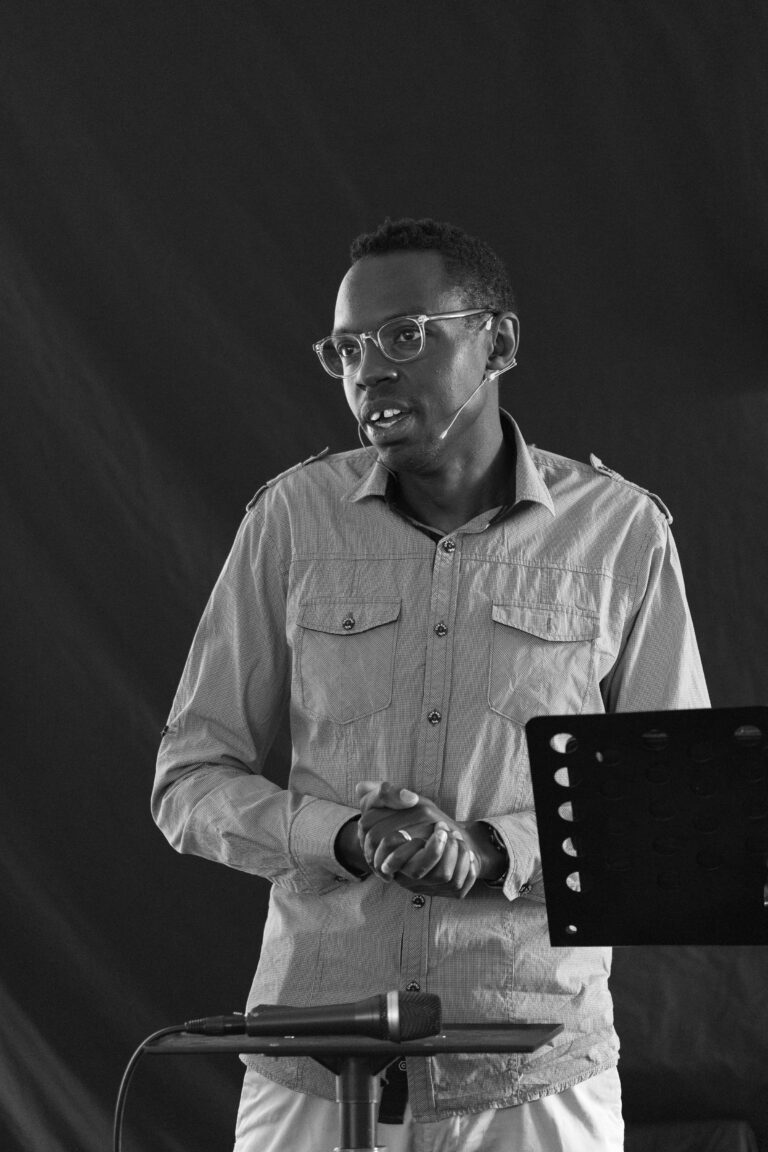
As we reminisce on the beautiful baptism and dedication service this last Sunday, I am struck by how Christ-centred and heartfelt it was. From Tim speaking to us from Ephesians to Lizzie and Ravi sharing their testimony, and as Amariyah shared her testimony before Ravi baptised her, I felt the Holy Spirit hovering gently in our service.


It reminded me of Psalm 23, which I will put up as a reflection.
The Good Shepherd
1 You, Lord, are my shepherd. I will never be in need.
2 You let me rest in fields of green grass. You lead me to streams of peaceful water,
3 and you refresh my life. You are true to your name, and you lead me along the right paths.
4 I may walk through valleys as dark as death, but I won’t be afraid. You are with me,
and your shepherd’s rod makes me feel safe.
5 You treat me to a feast, while my enemies watch. You honour me as your guest,
and you fill my cup until it overflows.
6 Your kindness and love will always be with me each day of my life,
and I will live forever in your house, Lord.
Over the next four weeks, I will share a short devotion each week based on the baptism and temptation of Jesus in Matthew 3 and 4. Each week, we will look at one of the temptations and how Jesus responded, as well as how relevant it is for us today. For this week, we reflect on Psalm 23.
I will leave this introduction of Ephesians for one more week….
How Paul came to the city of Ephesus is really fascinating, and you can read all about it in Acts chapter 19. Ephesus was a huge city, acting as the epicentre for trade. It was also a worship centre for most of the Greek and Roman gods. It boasted a pagan temple dedicated to the Roman goddess Diana (Greek Artemis). For over two years, Paul had an effective missionary presence there and converted many people to Christianity. Years later, after being imprisoned by the Romans, he wrote an important letter to the church there.
The movement of thought in the letter divides it into two distinct halves. In the first half (Eph. 1-3), Paul explores the story of the Gospel, how all history came to its climax in Jesus, and his creation of a multiethnic community of followers. The second half (Eph. 4-6) is linked to the first part by the word “therefore”. Paul explores how the Gospel should affect the way we live our lives, personally, in our community, and within our families.
The big idea is that the gospel should affect the way we live our lives personally, in our communities, and with our families.
Paul in Ephesians talks about God the Father and his love, God the Son and how he unites and unifies us, and God the Holy Spirit and how he helps us live our lives practically as people united “in Christ”. Paul wrote to expand the horizons of his readers so they might understand better the dimensions of God’s eternal purpose and grace and come and appreciate the high goals God has for his people.
I pray that out of his glorious riches he may strengthen you with power through his Spirit in your inner being, so that Christ may dwell in your hearts through faith. And I pray that you, being rooted and established in love, may have power, together with all the Lord’s holy people, to grasp how wide and long and high and deep is the love of Christ and to know this love that surpasses knowledge—that you may be filled to the measure of all the fullness of God. |
| Ephesians 3:16-19 |